Any excavation deeper than a few metres needs support. We walk through excavation retaining methods, the role of ground anchors, and how to choose the right solution.
Every deep excavation in a built-up area is a battle with physics: the soil wants in, the groundwater too, and neighbouring buildings often stand just metres from the edge. Securing the excavation is therefore one of the most important — and structurally most demanding — phases of building underground floors.
Why excavations need support
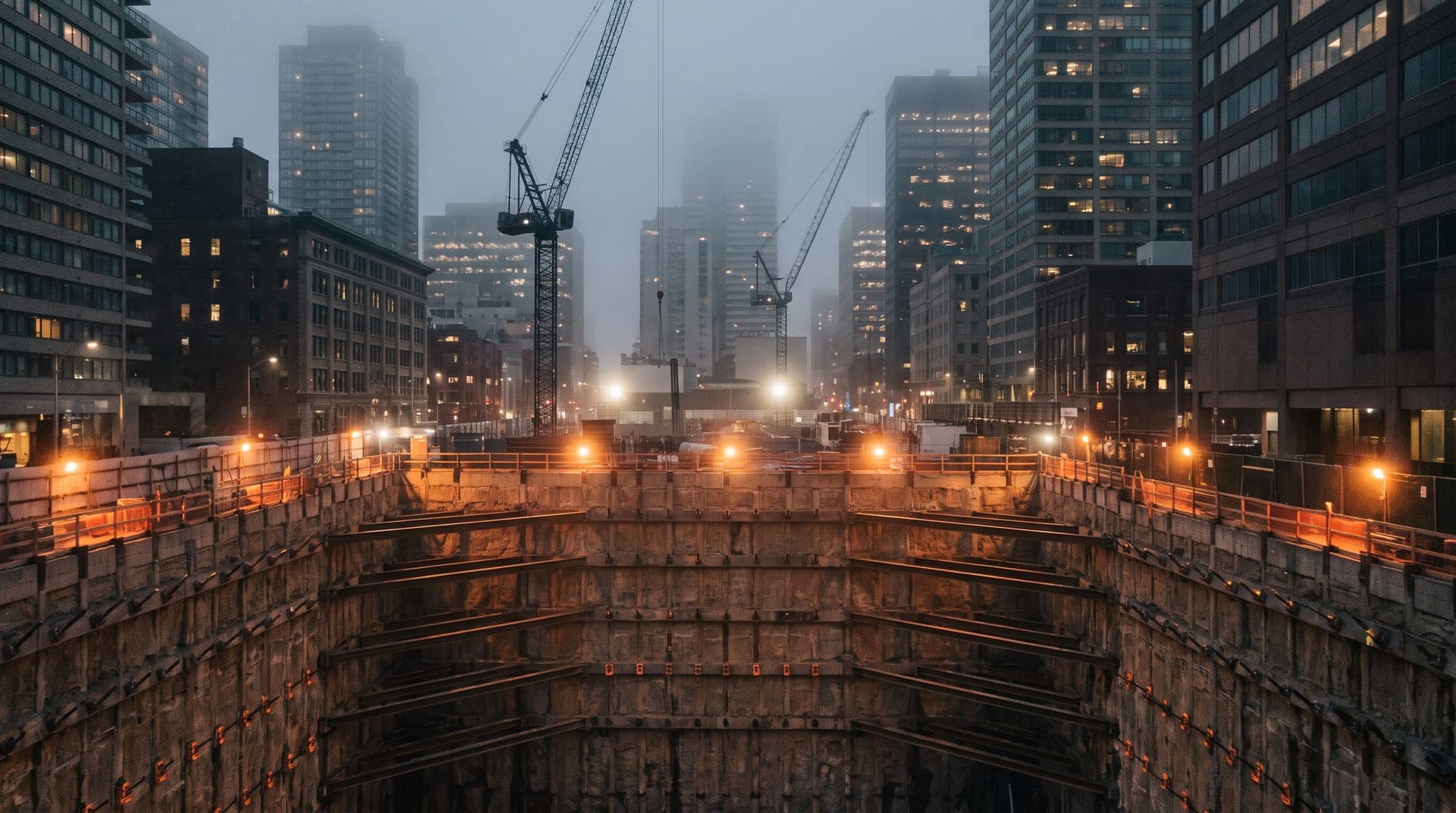
An unsupported excavation can only be done with sloped sides, which consume enormous space — unthinkable in a city. Vertical pit walls must be held by something: the retaining structure carries the earth pressure and protects surrounding buildings from settlement. Retaining failure is among the most serious construction accidents, so there is no room for compromise.
Overview of retaining methods
- Soldier-pile walls — steel piles with timber lagging; the economical classic for ordinary pits above groundwater.
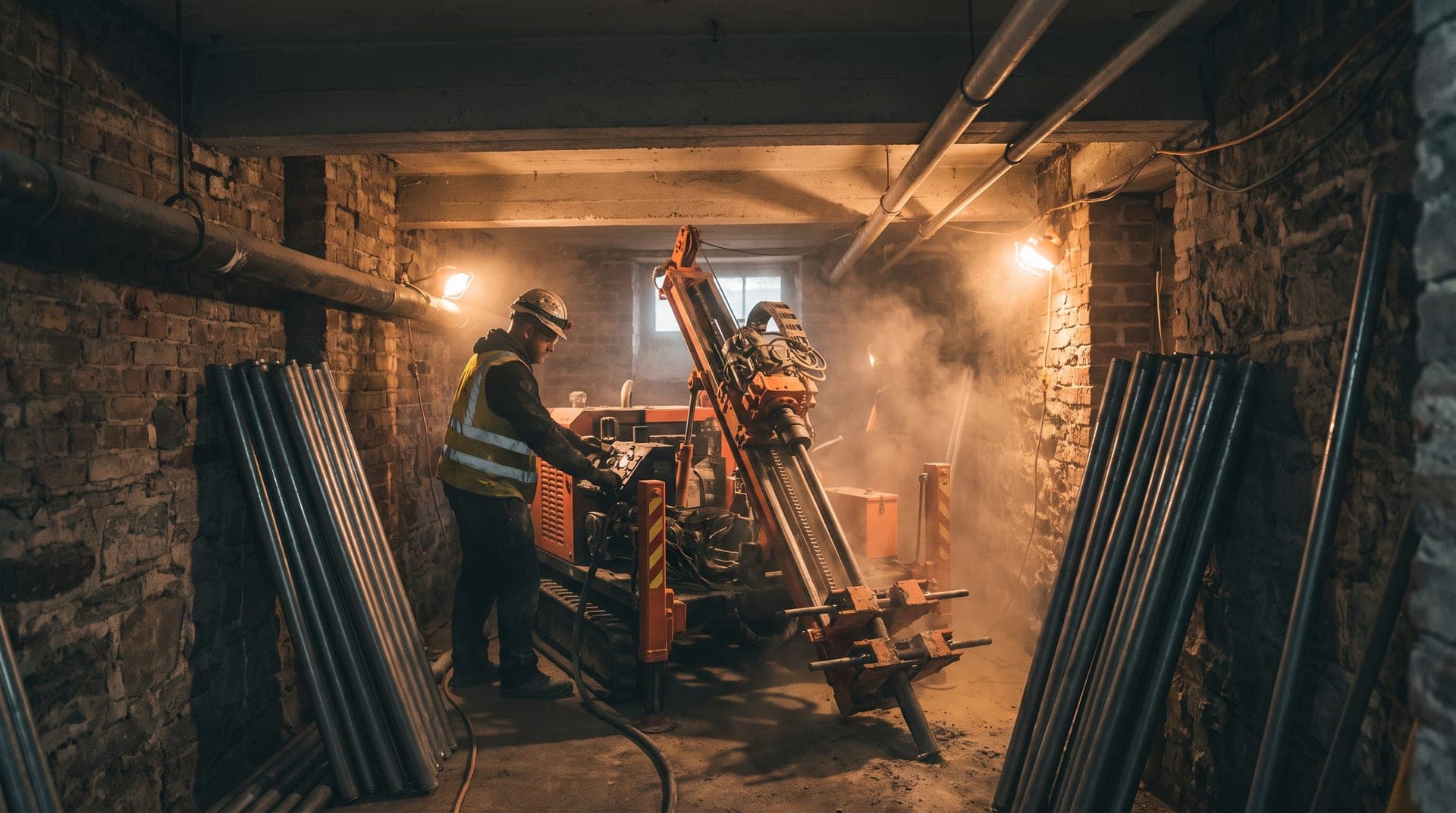
- Micro-pile walls — a slimmer variant for confined sites where heavy plant cannot operate.
- Jet-grouted walls — soilcrete columns form a continuous retaining and sealing wall; ideal below groundwater.
- Sheet-pile walls — driven steel profiles, a fast solution with a sealing function.
- Combinations with shotcrete and mesh — for rock cuts and cohesive soils.
The role of ground anchors
From roughly 3–4 metres of depth, retaining walls alone cannot resist the earth pressure — they need support. That support is ground anchors: tendons grouted deep behind the slip surface, tying the wall back into the ground. Anchors are stressed to the design force and each is tested, so the capacity is documented, not guessed.
Depending on depth, anchoring is done in one or more levels. With temporary retaining, anchors serve only during construction; in permanent structures they remain functional for decades.
How to choose the right solution
The choice depends on four factors: geology, groundwater level, pit depth and the surroundings. A dry pit in cohesive soil far from neighbours is fine with soldier piles; a deep pit below groundwater next to a heritage house calls for a jet-grouted sealing wall with several anchor levels.
There is no universal recipe — but there is a universal first step: a thorough geological survey and a consultation with a specialist before the first line of the design is drawn. It saves money and nerves.
Planning an excavation?
EKIA has designed and built excavation support since 1991 — from micro-pile walls in courtyards to anchored walls of city basements. Talk to us while the project is still on paper; good retaining design starts long before the first dig.