Small diameter, high capacity. Micropiles found new buildings and rescue settling houses — reaching places no other equipment can. When are they the right choice?
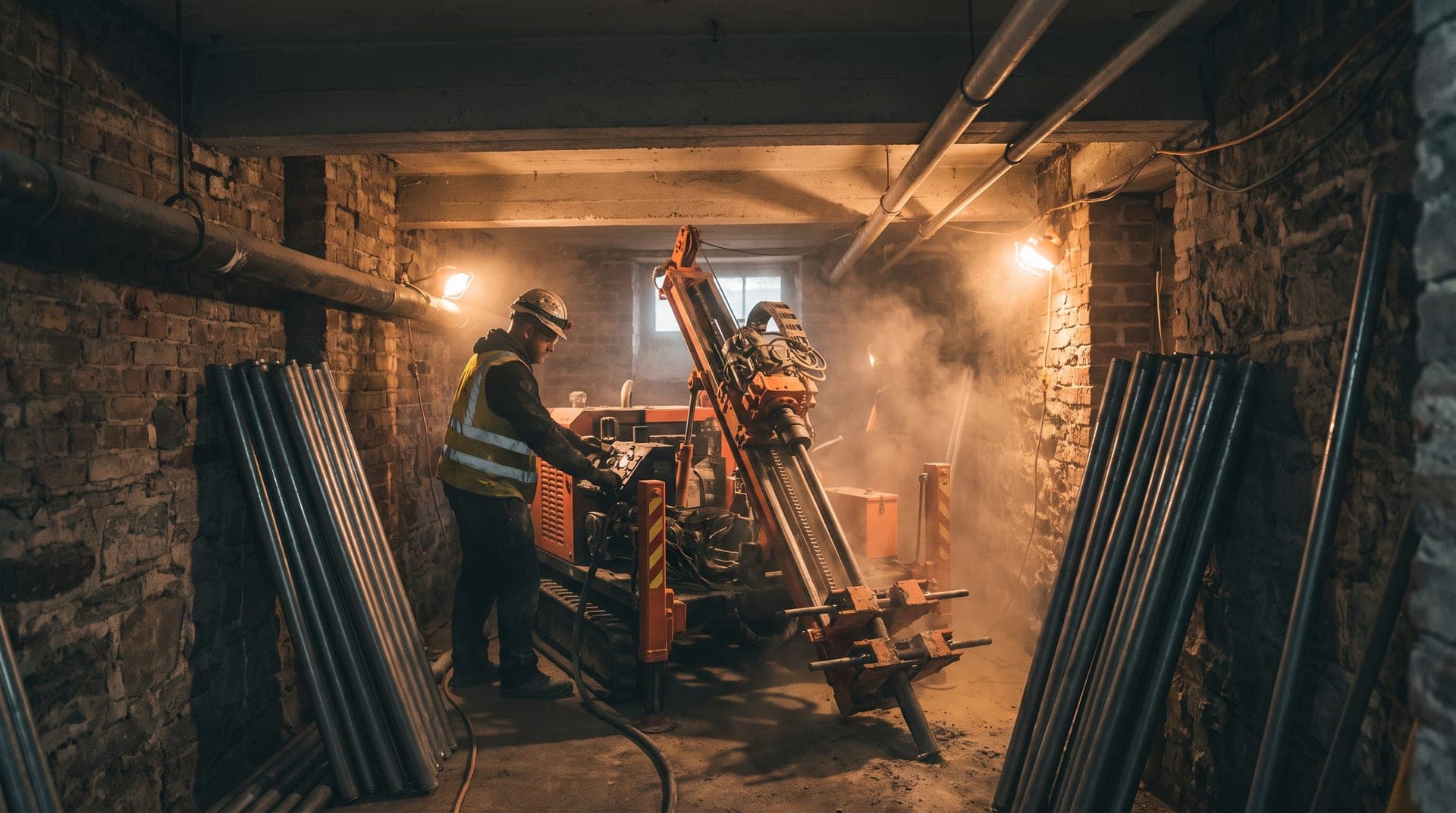
Imagine you need to support a house that has started to settle — but there is no room around it for a crane or a piling rig. Or you are adding a storey and the existing foundations cannot take the new load. Micropiles were made exactly for these situations: slender steel foundation elements that carry tens of tonnes into depth, installed by a rig that fits through a standard doorway.
What is a micropile
A micropile is a steel element — most often a thick-walled tube — installed into a small borehole and grouted with cement. Grouting the root creates a firm bond in the bearing stratum, allowing the micropile to carry both compression and tension from the structure into depth.
Typical borehole diameter is 100–300 mm; the capacity of a single micropile ranges in the hundreds of kilonewtons depending on profile, length and geology. A group of micropiles will reliably found even a multi-storey building.
Five situations where micropiles win
- Underpinning settling foundations — micropiles are installed right through the existing footing and take load immediately.
- Extensions and storey additions — when existing foundations cannot carry the new load.
- Confined spaces — infill plots, courtyards, basements; a compact rig works under a 2.2 m ceiling.
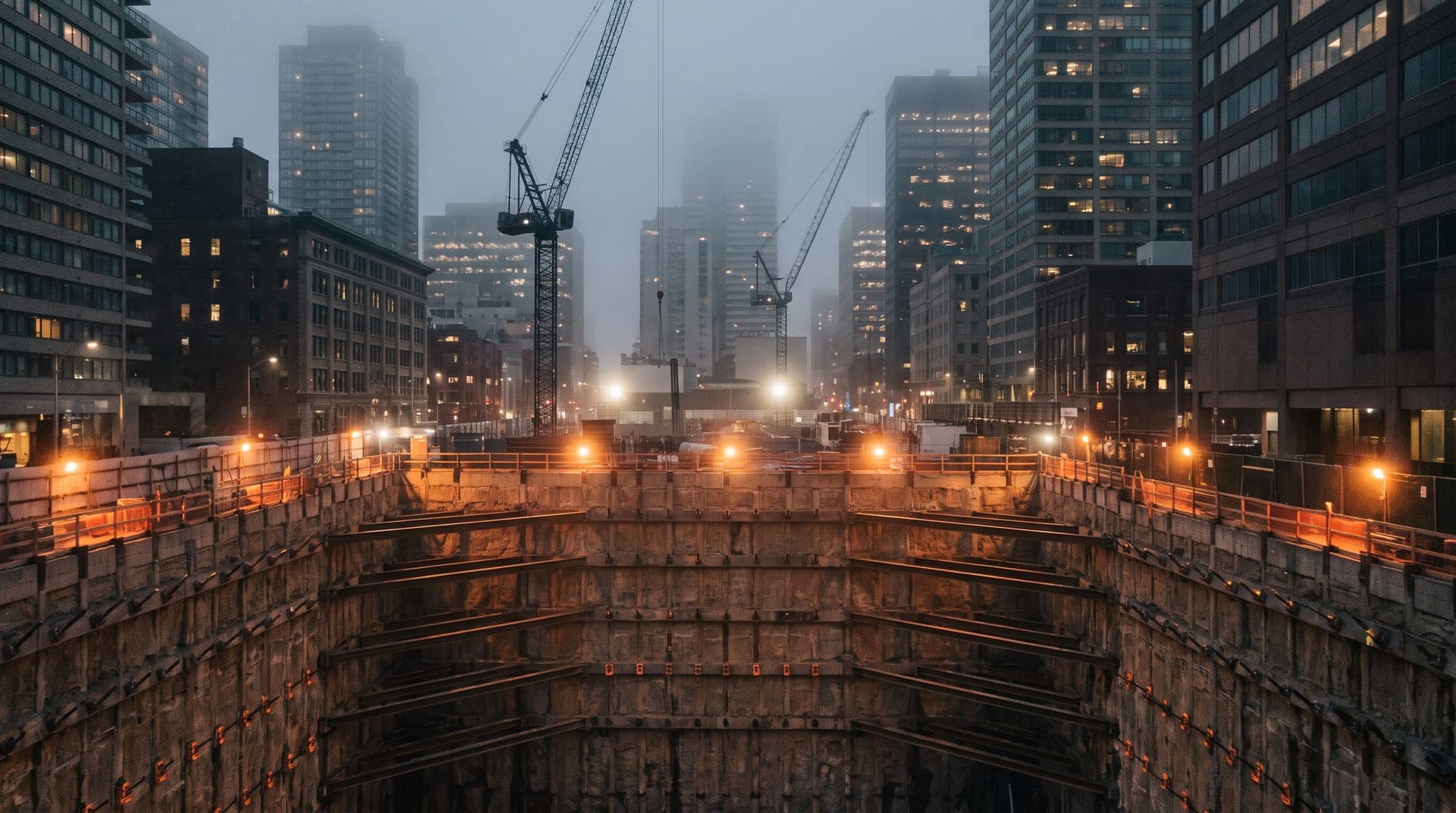
- Proximity of sensitive structures — micropiling is nearly vibration-free, safe next to neighbours and heritage buildings.
- Tension loading — tying structures down against groundwater uplift or overturning.
How micropiling works
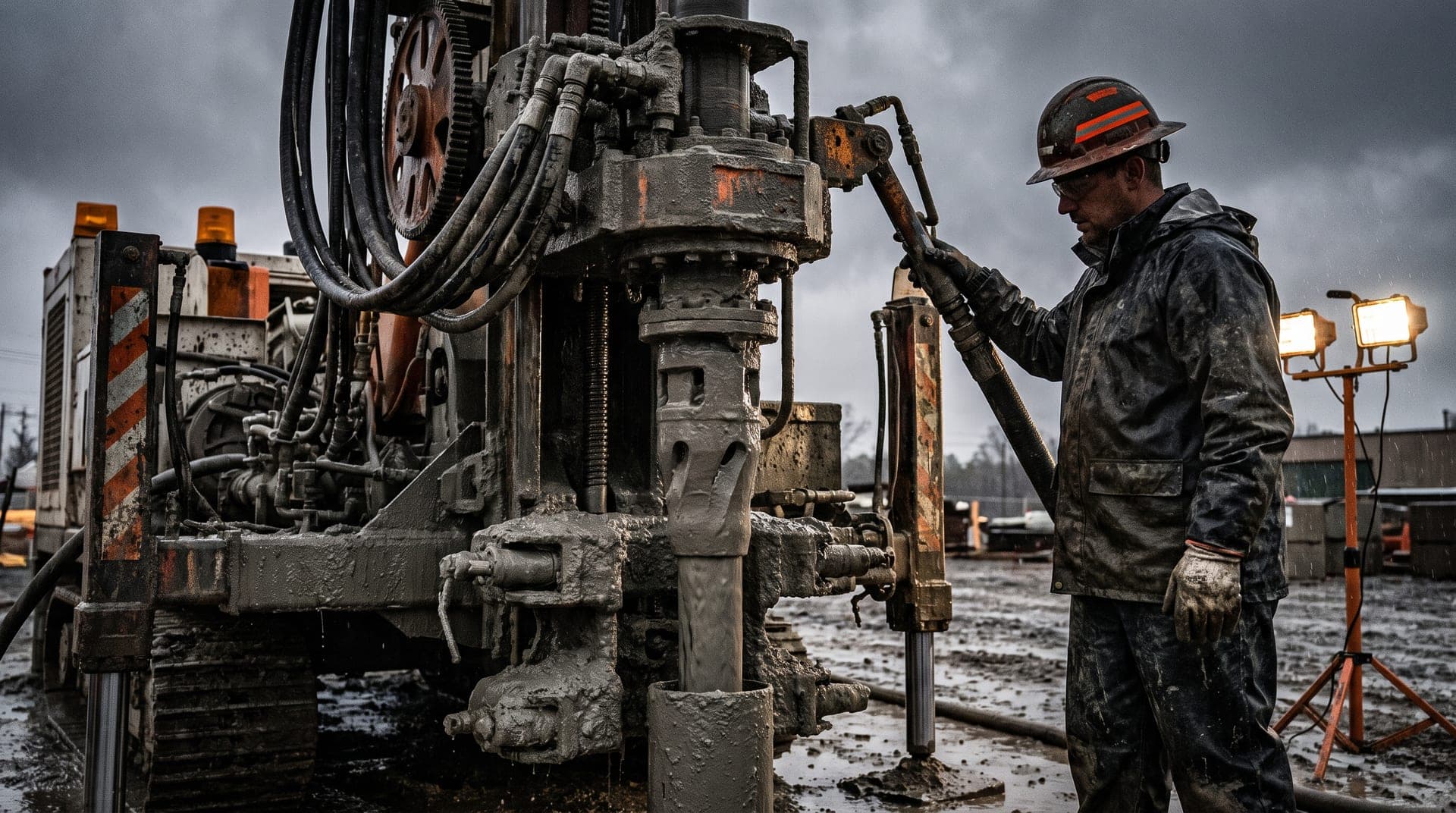
After the structural design, boreholes are drilled to the design depth — in refurbishments often at an angle through the existing foundations. A steel tube is installed and the root grouted with cement, for higher capacities repeatedly through sleeves.
Once the grout hardens, the pile head is detailed and connected to the structure. Installing one micropile takes hours, not days.
What to watch out for
The key to success is solid geological data and an honest structural design. An undersized micropile is a risk; an oversized one, wasted money. Verifying capacity by a load test also pays off — with us it is part of the standard procedure.
EKIA has been installing micropiles for over 30 years, from family houses to industrial halls. We are happy to assess your project too — the consultation is free.