
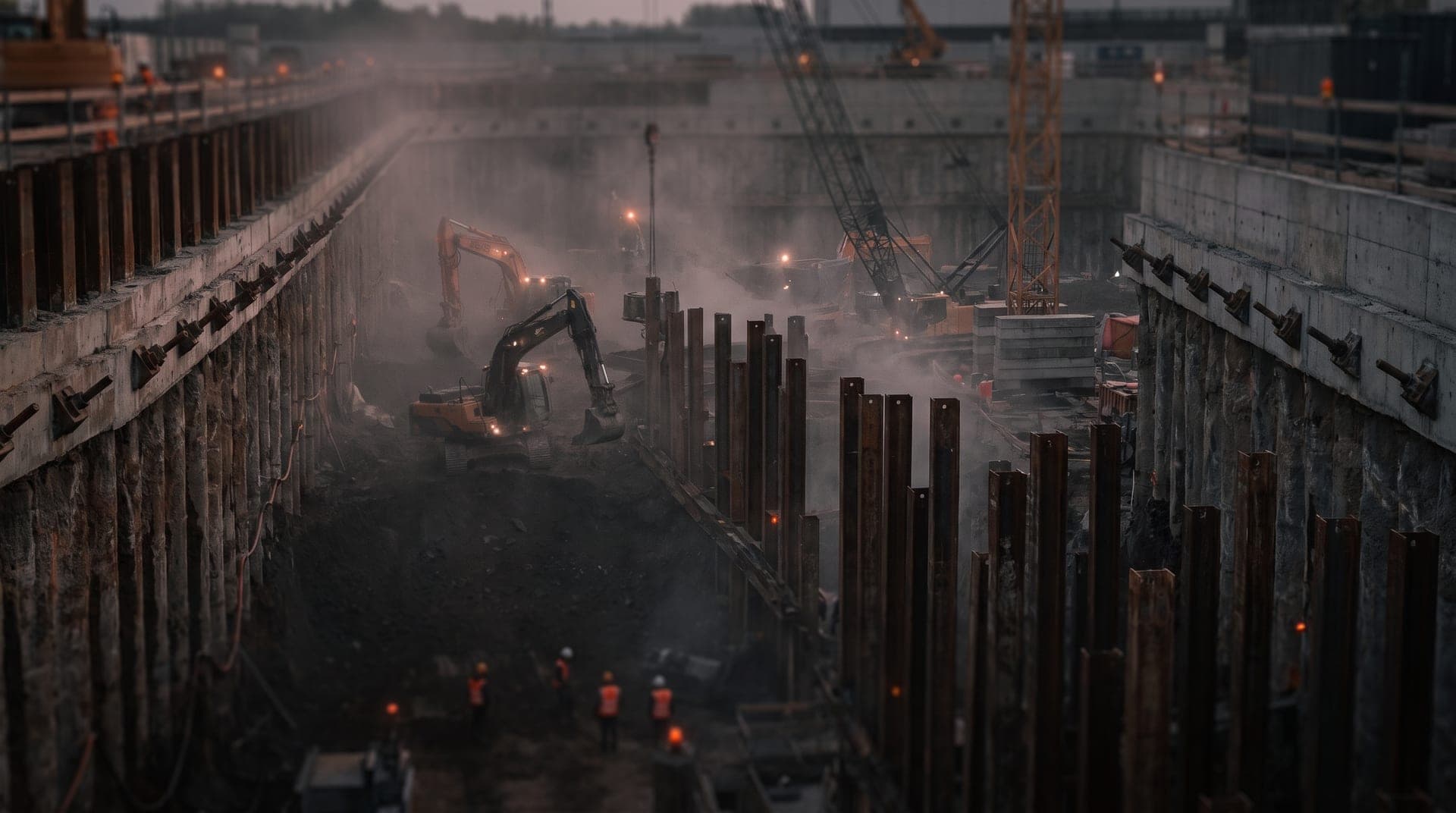

Micropiles
A steel foundation element that carries compression and tension loads into deeper, stronger strata. The go-to solution for confined sites and refurbishments.
A micropile is a steel foundation element that transfers loads (compression and tension) from the structure into deeper and more competent soil layers.
Thanks to the small borehole diameter and compact equipment, micropiles are ideal for underpinning existing foundations, infill construction, strengthening structures and founding where a piling rig cannot reach. The micropile root is grouted with cement, which significantly increases capacity.
Key benefits
Compression & tension
One technology for founding new builds and tying down against uplift.
Minimal access
Rigs that fit through standard doorways — even in basements.
Gentle to surroundings
Minimal vibration and noise — safe right next to existing structures.
Fast execution
No large earthworks, follow-up trades can continue immediately.
How the work proceeds
- 01
Micropile design
Sizing per loads and geology, layout per structure.
- 02
Drilling
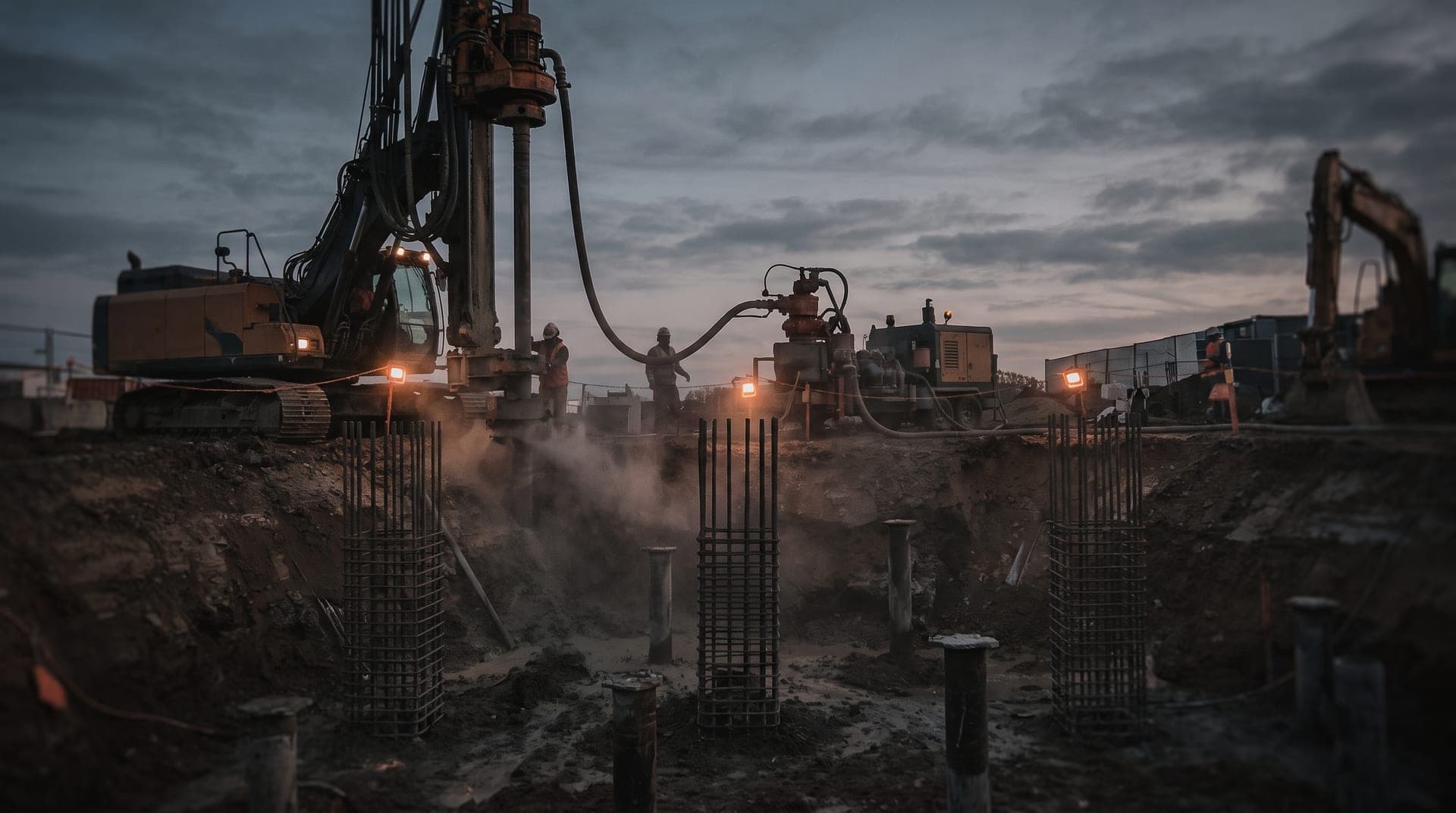
Small-diameter borehole to design depth, even in tight spaces.
- 03
Installation & grouting
Steel tube installation and cement grouting of the root.
- 04
Structural connection
Pile head detail and connection to the foundation.
Frequently asked questions
When are micropiles better than conventional piles?
With limited access (refurbishments, basements, infill plots), where surroundings are sensitive, or for underpinning. On open greenfield sites conventional piles are usually more economical.
What capacity does a micropile have?
Depending on profile, length and geology, typically hundreds of kN. Exact capacity is set by structural design and verified by a load test.
Will drilling damage my house?
No — micropiling is a near vibration-free technology designed specifically for work near sensitive structures and inside buildings.
Related services
Got a project that needs special foundation work?
We'll prepare a solution proposal and price quote free of charge. We just need a few details about the construction.