Jet grouting is one of the most versatile ground-improvement methods. We explain how it works, where it excels and what the execution looks like step by step.
When people hear "ground improvement", most imagine concrete piles. Yet there is a technology that builds load-bearing elements directly from the soil it works in — even underneath an existing house or from a small basement. It is called jet grouting, and since the 1980s it has been a pillar of special foundation engineering.
How jet grouting works
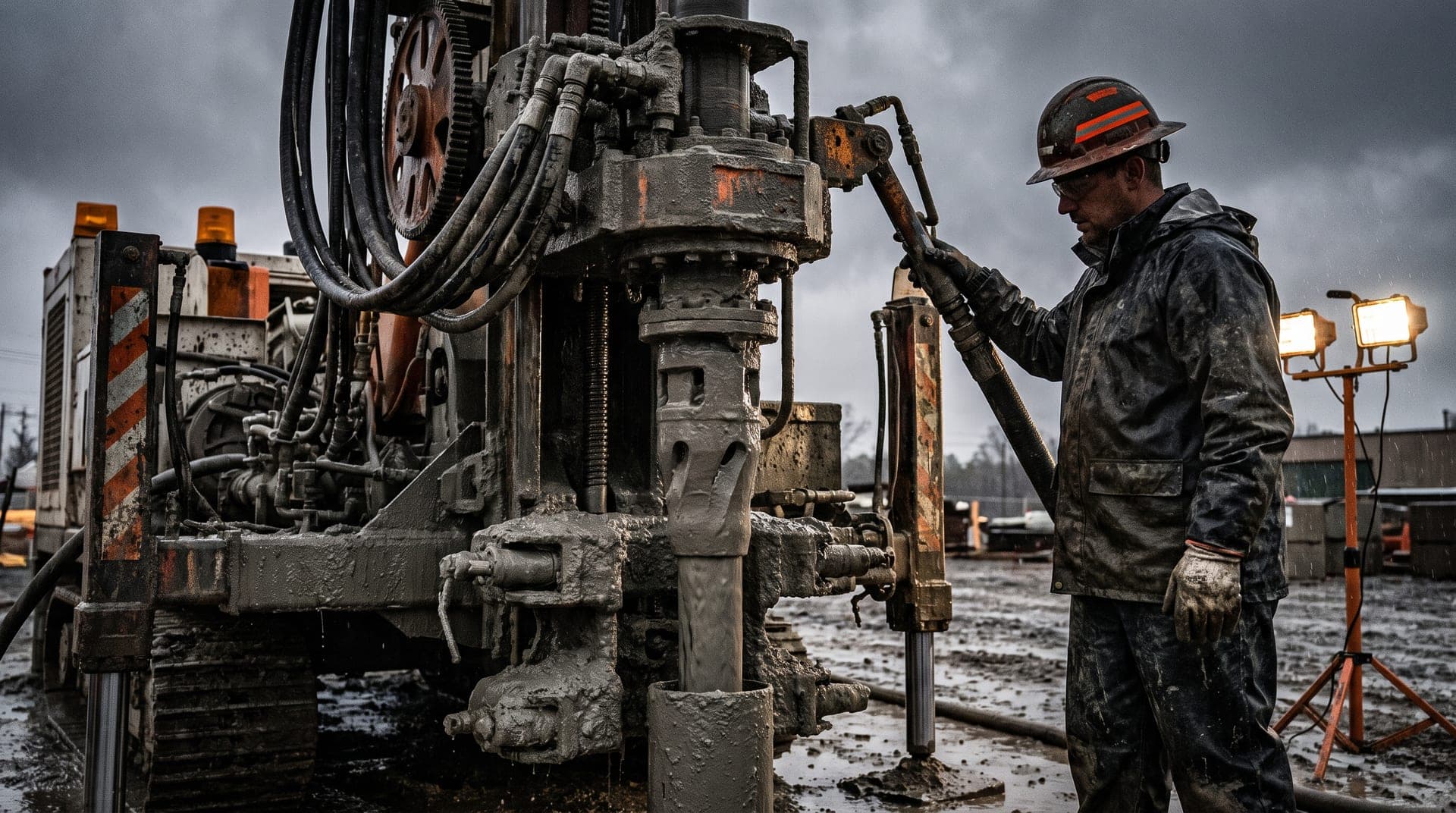
The principle is elegant: a small borehole of only about 100–150 mm is drilled. A rod with a nozzle is lowered in, and while slowly rotating and withdrawing, cement suspension is jetted into the surrounding soil at 300 to 600 bar. The high-pressure jet erodes the soil structure and mixes it with cement.
The result is a column of stabilised soil — soilcrete — with a diameter from 60 cm up to 2.5 m depending on the method and soil type. Once hardened, the column has predictable strength and can carry loads, retain soil and seal against water.
Where jet grouting excels
- Underpinning existing foundations — for storey additions, basement deepening or settling buildings.
- Founding new structures in poor geology — fills, soft clays, high groundwater.
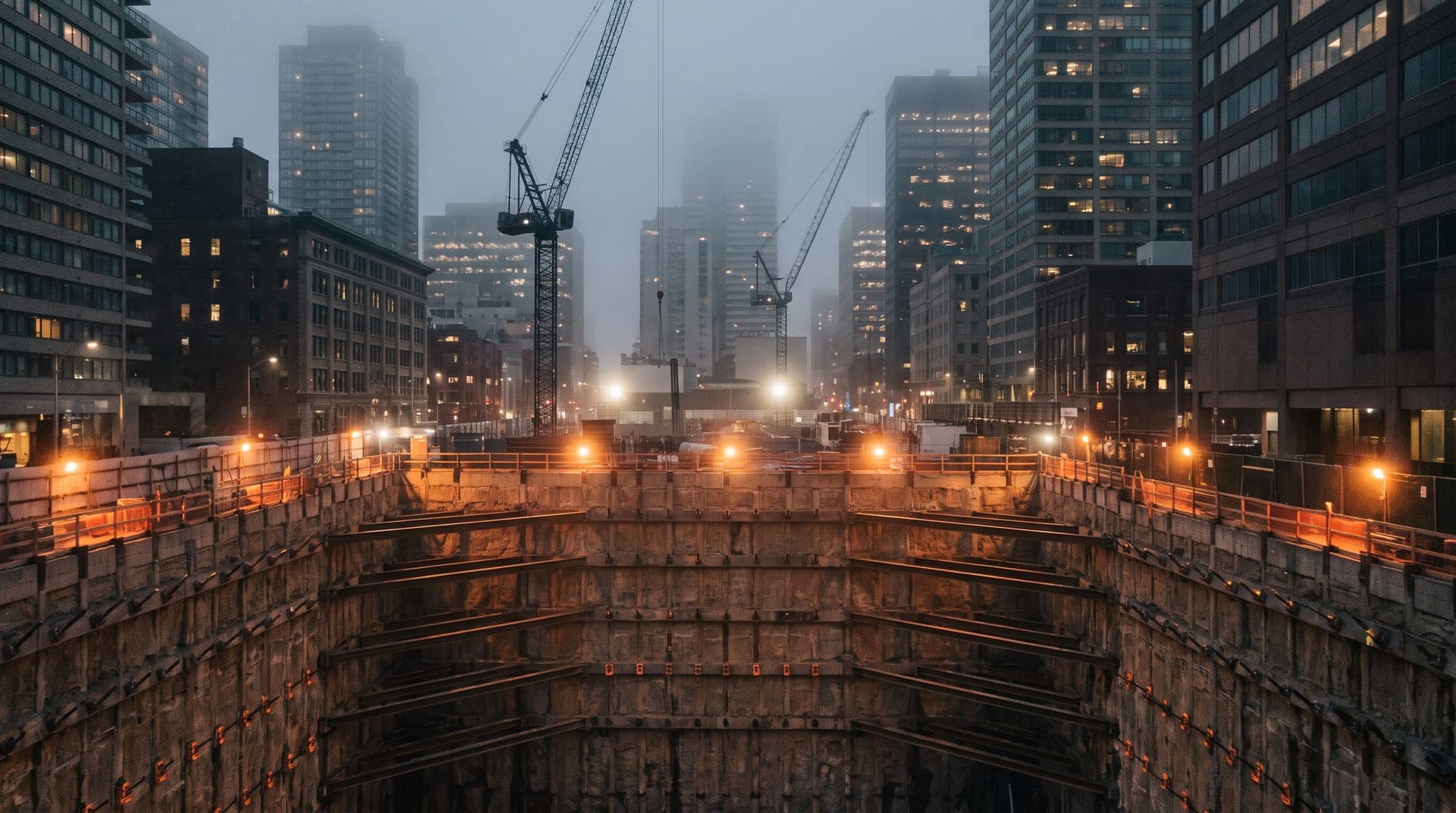
- Retaining and sealing excavations — columns form a continuous wall holding both soil and water.
- Underground cut-off walls — protecting excavations from groundwater inflow.
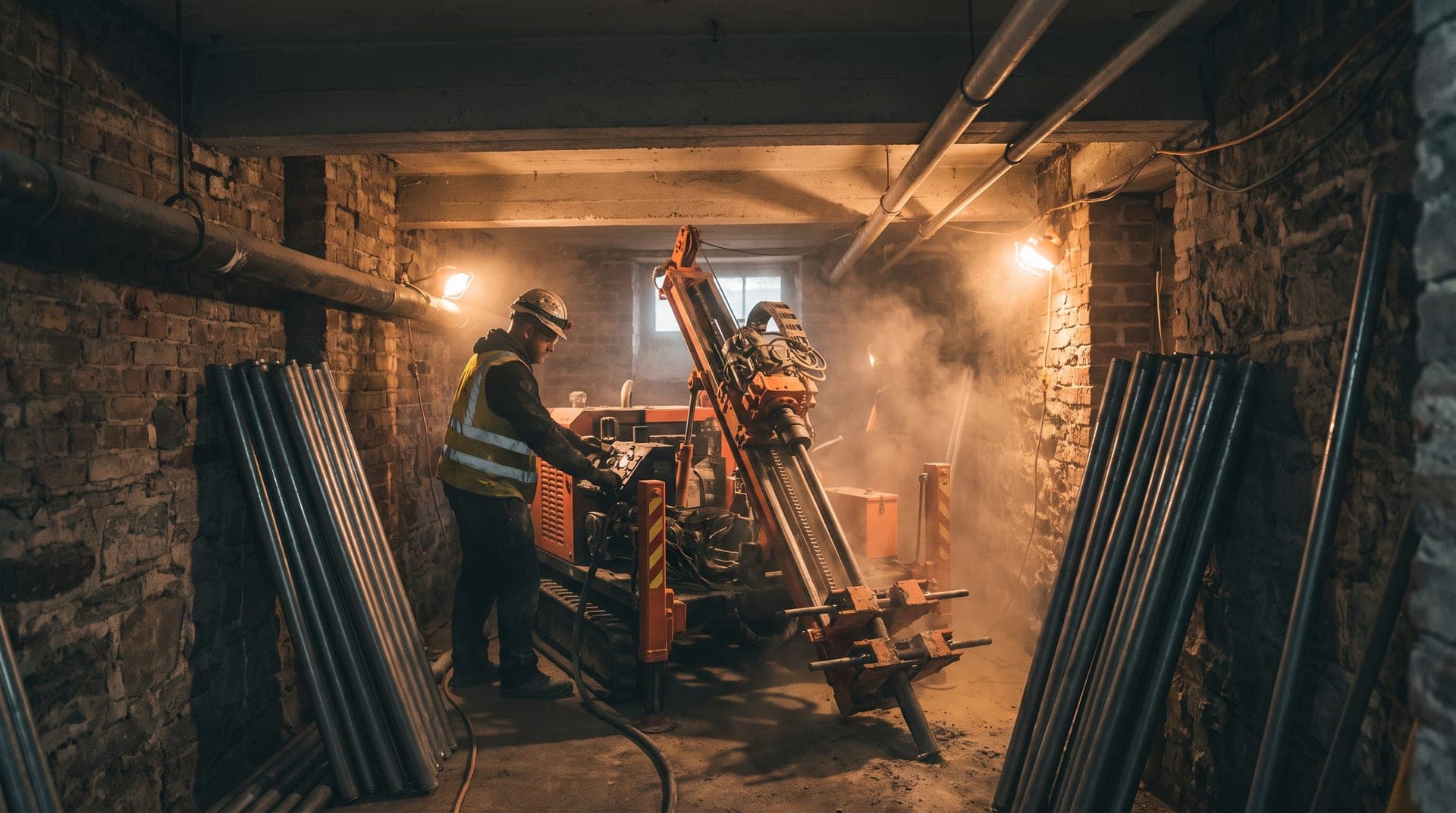
- Confined spaces — compact rigs work even from low-ceiling basements.
The execution step by step
Every project starts with a geological assessment — column parameters cannot be designed without knowing the ground. Then comes the design: diameter, strength, layout and depth of columns, all backed by structural calculation.
The execution itself is fast. The rig drills to the design depth, then jetting begins — the rods are slowly withdrawn under constant rotation and the high-pressure jet forms the column from the bottom up. One column takes tens of minutes to hours. Quality is monitored continuously via jetting parameters and later verified by strength tests.
Jet grouting vs. conventional piles
Compared to conventional piles, jet grouting has three key advantages: it needs minimal access (the rig fits through a door), no large earthworks, and it works in soils where a pile would need casing. Conversely, for greenfield new builds with simple geology, piles are usually more economical.
The right choice always follows from the geological survey and structural requirements — which is why every quotation of ours starts with a free consultation.
Need to strengthen your ground?
EKIA has been performing jet grouting since 1991 across the Czech Republic. Send us a description of your situation and we will recommend the best solution including a quotation.